IASF Milano
IASF Milano, formely IASF-MI, the Milan Section of the
Istituto di Astrofisica Spaziale e Fisica Cosmica, and before 2002
IFCTR (Istituto di Fisica Cosmica e Tecnologie Relative),
founded by the late Prof. G. Occhialini, is a research
structure of INAF (Istituto Nazionale di Astrofisica).
IASF Milano has a staff of 26 researchers, and 10 technicians and
administrative officers, and hosts almost as many associates, post-docs,
Ph.D. and undergraduate students.
IASF Milano is active in the study of the universe through observations from space and ground-based observatories, at wavelengths ranging from radio to near-infrared, visible, UV, X- and γ-rays.
Why Lambrate.inaf.itResearch Projects
Study of the formation and evolution of galaxies, AGNs, and of the Large Scale Structure from z=4-5 to the present epoch.[...]
Cosmic Microwave BackgroundMapping the anisotropy field over the whole sky with an unprecedented combination of sensitivity, angular resolution and frequency coverage through Planck. Planck will reconstruct the angular power spectrum up to the Silk damping region with an accuracy that will be mainly limited by unavoidable cosmic variance and astrophysical foregrounds; it will also accurately measure the E-component of the CMB polarization anisotropy and might provide a detection of the B-mode component. Planck is scheduled for launch in 2008.[...]
X-ray clustersAnalysis and interpretation of X-ray cluster data: shape of temperature profiles and demise of the so called "Research/cooling flow model". Calibration of both BeppoSAX MECS and XMM-Newton EPIC instrument, and development of a number of software tools to analyze data from these missions. Development of future X-ray missions.[...]
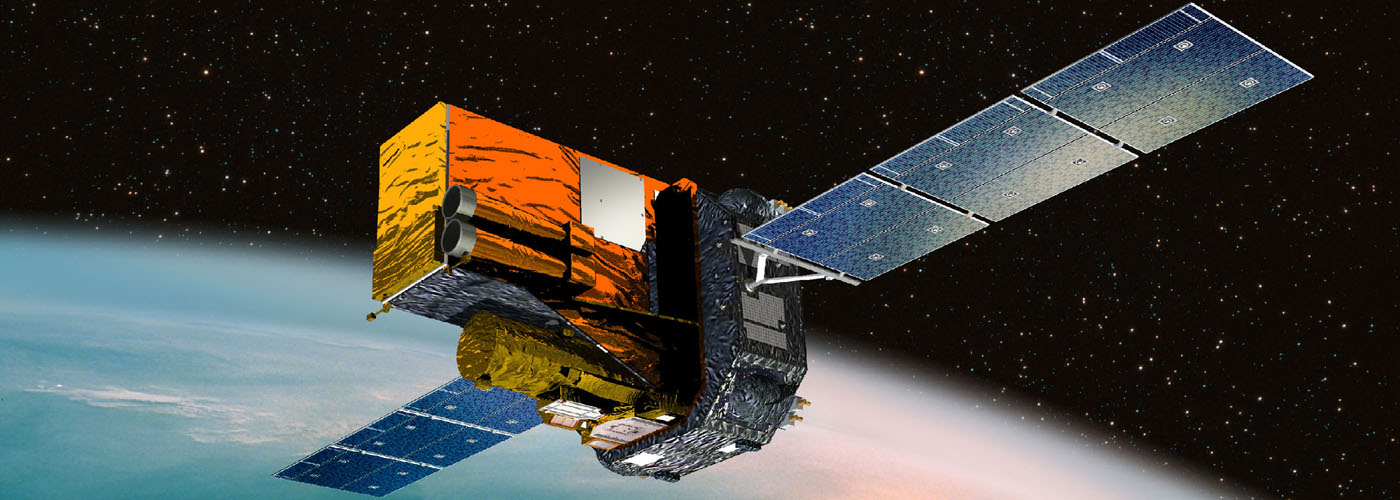
AGILEAGILE (Astrorivelatore Gamma ad Immagini LEggero) is the Italian satellite dedicated to high-energy astrophysics, launched on April 23, 2007. Its goal is the study in the γ-ray (30 MeV - 50 GeV) and hard X-ray (20-60 keV) bands of AGNs, GRBs, Pulsars,Unidentified &gamma-ray sources, Supernova Remnants, microquasars, and galactic and extragalactic diffuse emission.[...]
GLASTThe GLAST satellite is a large NASA mission for γ-ray astronomy, with an important Italian participation, which will be launched in early 2008. IASF Milano is part of the collaboration responsible of the LAT (Large Area Telescope). Thanks to the full access to the Collaboration proprietary data, we plan to play an important role in the identification of new classes of sources in the γ-ray sky.[...]
Isolated Neutron StarsStudy the multiwavelength phenomenology of the different classes of Isolated Neutron Stars (INSs) in order to unify their apparent diversity in a coherent physical scenario.[...]
Study of the physical processes at work in High Mass and Low Mass X-ray Binary systems (HMXRBs and LMXRBs) powered by accretion.[...]
Gamma-ray BurstsThe objectives of this group are a) to provide rapid localizations of GRBs to the worldwide scientific community, b) to study the GRB prompt gamma-ray emission and their X-ray afterglows, c) to use the GRBs as probes of the dust distribution in our Galaxy.[...]
Detectors, Read-out Electronics and High-Reliability Computing SystemsThe final objective is the development of technologies supporting advanced instruments for Astrophysics. These activities are split into several research and development projects: 1.Extended Range Silicon-Scintillator Detectors for High Energy Astrophysics 2.Spectroscopic CZT detectors development for X-ray and gamma-ray imaging instruments 3.Fault emulation 4.Photon counting UV detectors based on MCP 5.World Space Observatory WSO-UV[...]
Astronomical SoftwareThe purpose of the Astronomical Software Group is to provide the astronomical community with software packages useful for data reduction and analysis, with particular emphasis towards applications connected with Multi-Object Spectrographs, and databases/catalogs handling. All the software packages and libraries produced so far are license free and publicly available. The Astronomical Software Group activities are strictly connected with the Cosmological surveys. During the last 5 years, these projects have inspired and driven the activity of the group, while benefiting of the software packages produced. In the last 3 years, the Group has enlarged and generalized its interest to include technological research topics like Virtual Observatory and GRID applications.[...]